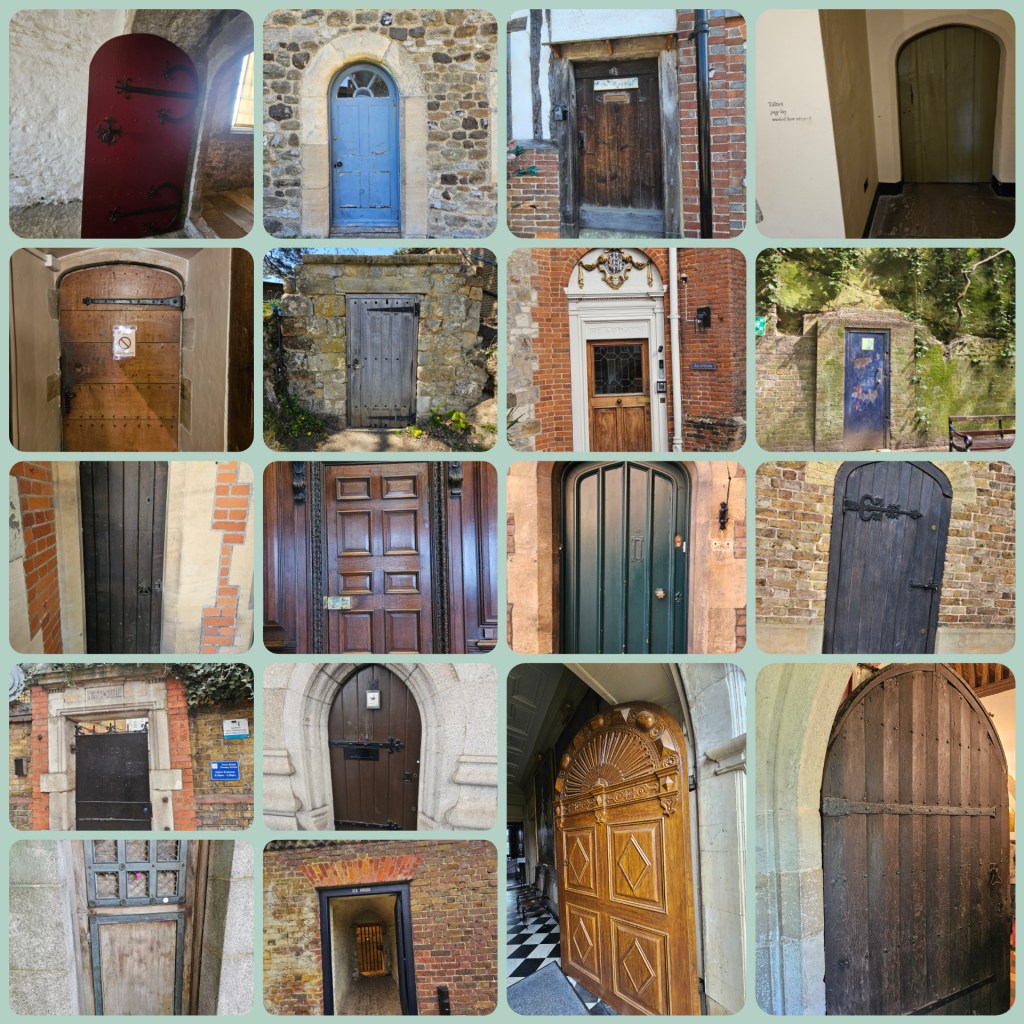
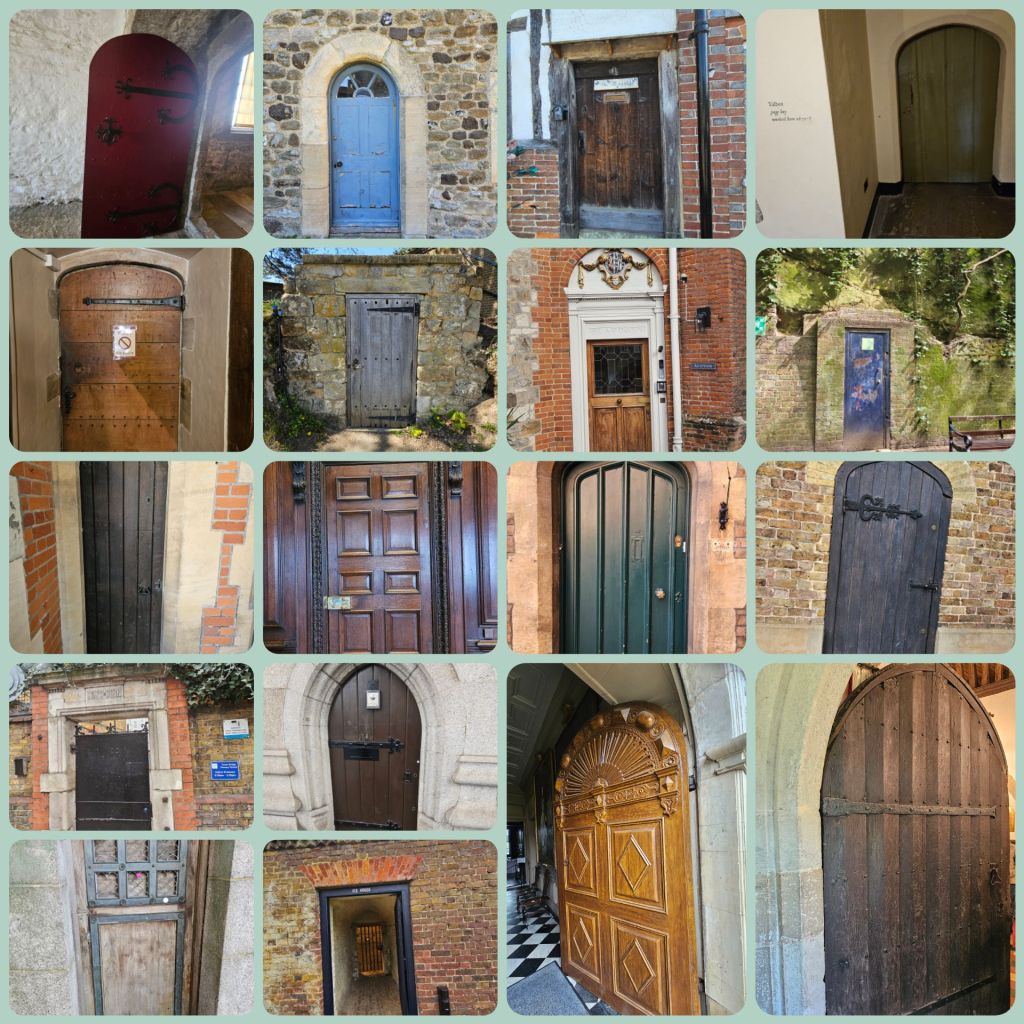
Apparently, I have developed a thing for doors.
Not normal doors. I’m not wandering around taking photos of freshly painted suburban front doors with shiny new handles and sensible security screens. No offence to practical doors, but they are not really my thing.
I mean old doors.
The strange ones.
The heavy ones.
The crooked ones.
The ones tucked into stone walls or half-hidden in corners.
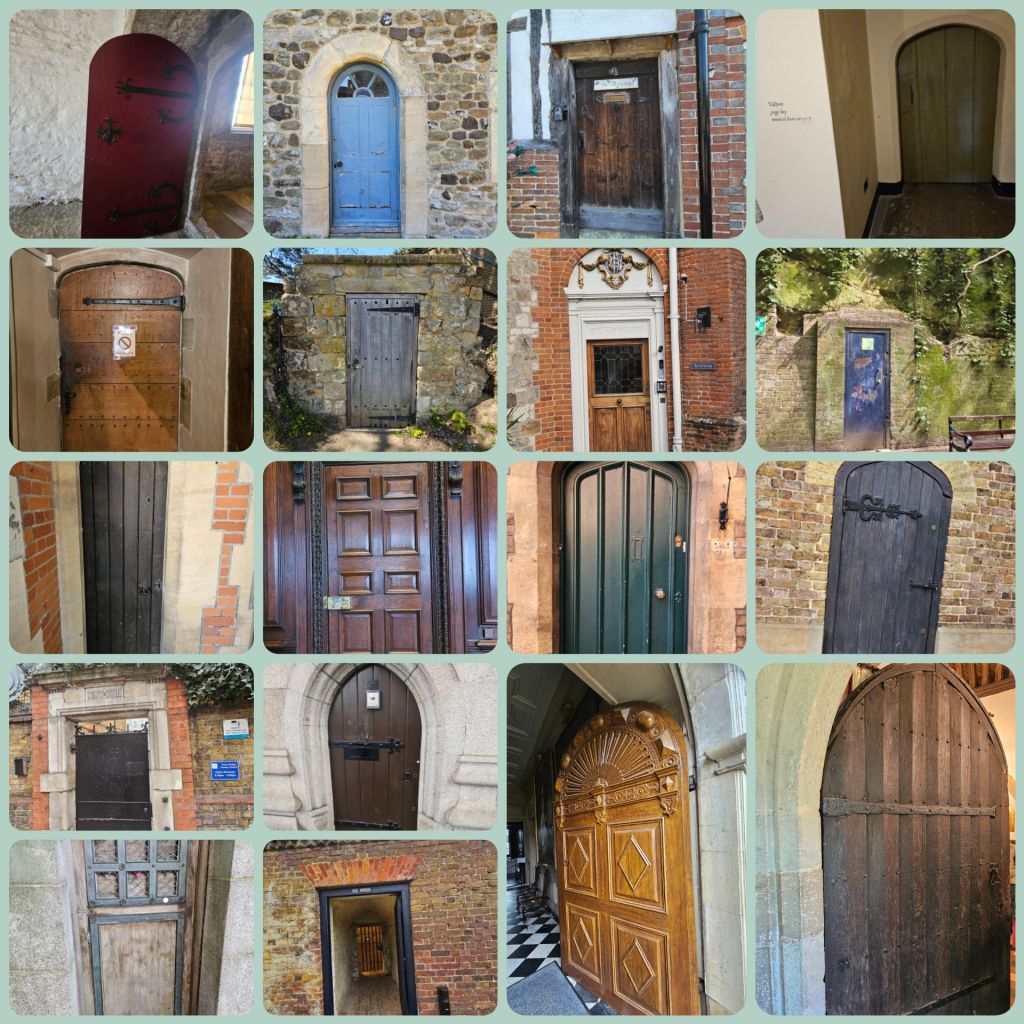
The ones with iron hinges, peeling paint, arched tops, tiny windows, thick timber, bolts, latches and enough mystery to make me stop walking and immediately wonder what is behind them.
England seems to do these doors very well.
Some look like they lead to cellars. Some look like they lead to chapels. Some look like they lead to private courtyards, hidden staircases, forgotten rooms, ancient storage cupboards or possibly the opening scene of a ghost story.
Which, obviously, makes me want to open them.
I didn’t, because I am a mostly sensible person and there are laws and social expectations and other irritating obstacles. But the urge was definitely there.
There is something about an old door that feels like a question.
Who walked through it?
Who locked it?
What was carried in?
What was hidden away?
How many hands touched the wood before mine only touched it with my eyes and my camera?
A lot of these doors are not beautiful in the perfect, polished sense. That’s probably why I like them. They are scratched, worn, weathered, patched, faded, dented and slightly odd. They have survived people, seasons, repairs, paint choices, neglect, usefulness and time.
They look like they have been through things.
Maybe that is what I like most.
Old places don’t have to explain themselves. They just stand there holding all their layers. The stone, the timber, the rusted iron, the uneven frames, the little signs of age. Nothing is pretending to be new. Nothing is trying too hard.
A door like this doesn’t say, “Look how perfect I am.”
It says, “I have been here a long time. You may wonder.”
And I do.
I wonder far too much, probably. I wonder what was behind them fifty years ago. Two hundred years ago. I wonder whether someone opened that same latch carrying bread, or keys, or letters, or secrets, or just a bucket because not everything in history is dramatic, unfortunately.
That is one of the things I love about travelling slowly. It gives me time to notice small things. Not just the big castles and famous houses and official rooms with ropes across the doorways. Those are interesting too, but sometimes the little details stay with me more.
A worn step.
A crooked window.
A carved beam.
A strange little passageway.
A door that looks like it belongs in a story.
Maybe that is why I kept photographing them.
They feel like beginnings.
Not grand beginnings. Not the kind with trumpets and sweeping music and someone dramatically changing their entire life in one neat scene, because life is rarely that tidy and usually involves laundry.
More like quiet beginnings.
A door you notice.
A path you might take.
A room you haven’t seen yet.
A little pull of curiosity.
I suppose that is where I am in life too. Standing in front of a lot of doors, some old, some new, some sensible, some probably highly questionable.
For now, I’m just photographing the ones I’m not allowed to open.
Which is probably for the best.
Because honestly, some of them look like they might contain either a ghost, a medieval staircase, or a very annoyed caretaker.
 Roaming Towards Myself
Leave a comment