So much to do.
Some places surprise you in the best way. Reigate was one of those places for me.
I knew there were a few free places to explore, but I did not expect the day to feel quite so full. Priory Park, Reigate Castle Grounds, Reigate Fort, Reigate Tunnel, and the town centre all gave me something different: lake walks, nesting swans, old stone, military history, views, caves, pretty streets and gorgeous old buildings.
And the best part? Apart from coffee, food or whatever else you choose to buy, the exploring itself can be completely free.
Mummy Swan
Priory Park
Priory Park feels soft and calm, with the lake, reeds, swans, woodland paths and the old priory building sitting in the middle like it knows it has been there longer than everyone else.
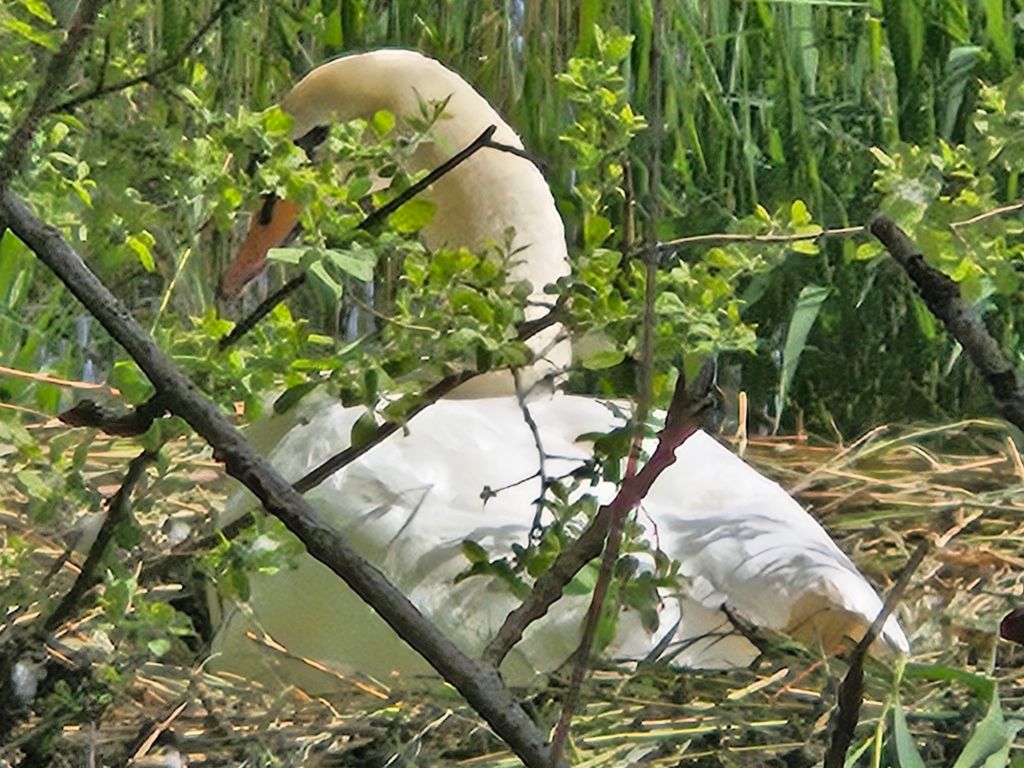
The park is an easy place to wander without needing much of a plan. The lake is the main draw, especially with the reeds along the edge and the trees reflecting in the water. It has that slightly tucked-away feeling in places, particularly around the shaded paths near the water. One minute it feels open and family-friendly, and then a few steps later you are peering through branches at green water, fallen trees and swans moving around like they own the place.
The swans were my favourite part. Seeing one nesting made the whole place feel more alive and much more interesting than just another pretty park. It was one of those small travel moments that is easy to miss if you are rushing around trying to tick things off a list. The lake area also has ducks, birds, reeds and little hidden corners, so it is good for photos as well as just wandering.
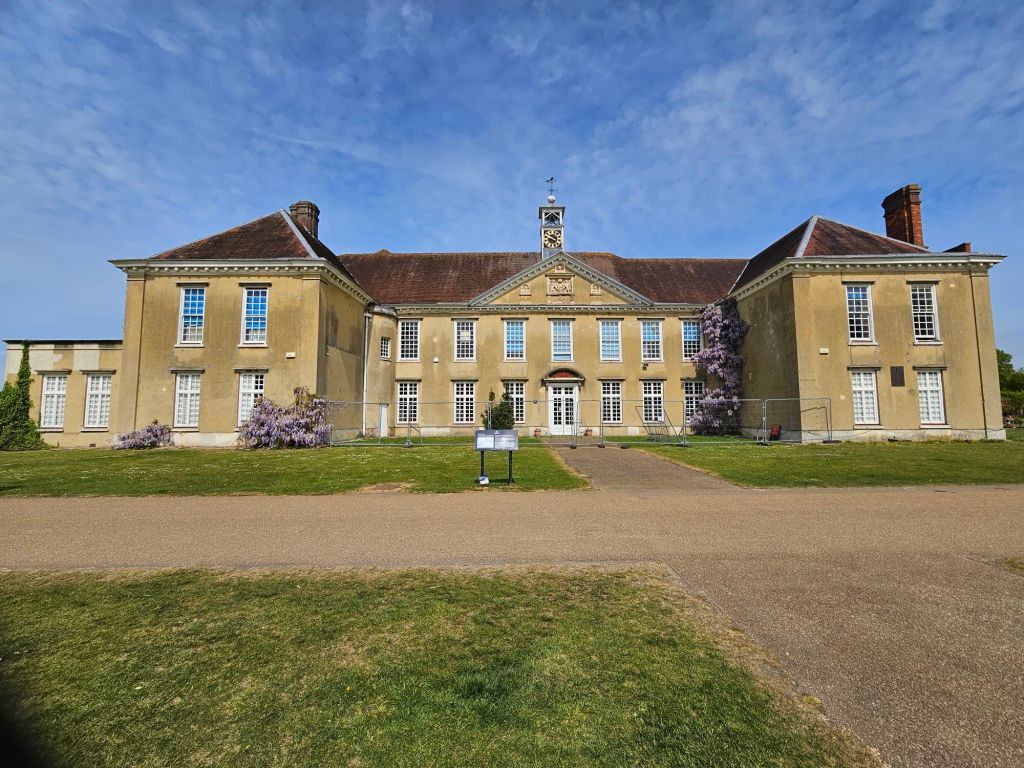
There is also some real history here. Reigate Priory was originally founded in the early 13th century. After the Dissolution of the Monasteries, it was later converted into a mansion during Tudor times. In 1541, Henry VIII granted the Manor and Priory of Reigate to Lord William Howard, who was the uncle of Catherine Howard, Henry’s fifth wife.
The estate changed over time, with later owners shaping the grounds. One of the big names connected with the Priory is Lady Henry Somerset, who spent much of her childhood there and became the owner after her father died in 1883. Between 1885 and 1905, she made major improvements to the estate, including changes to the main entrance, the Sunken Garden and Monks’ Walk.
What I liked about Priory Park is that it works on a few levels. You can go for a simple walk around the lake, take photos of the swans and water, look at the old priory building, or just sit somewhere and let the place be calm for a while. It is free, central, easy to enjoy, and pretty enough to feel like you have actually done something with the day without needing tickets or a big plan.
Reigate Castle Grounds
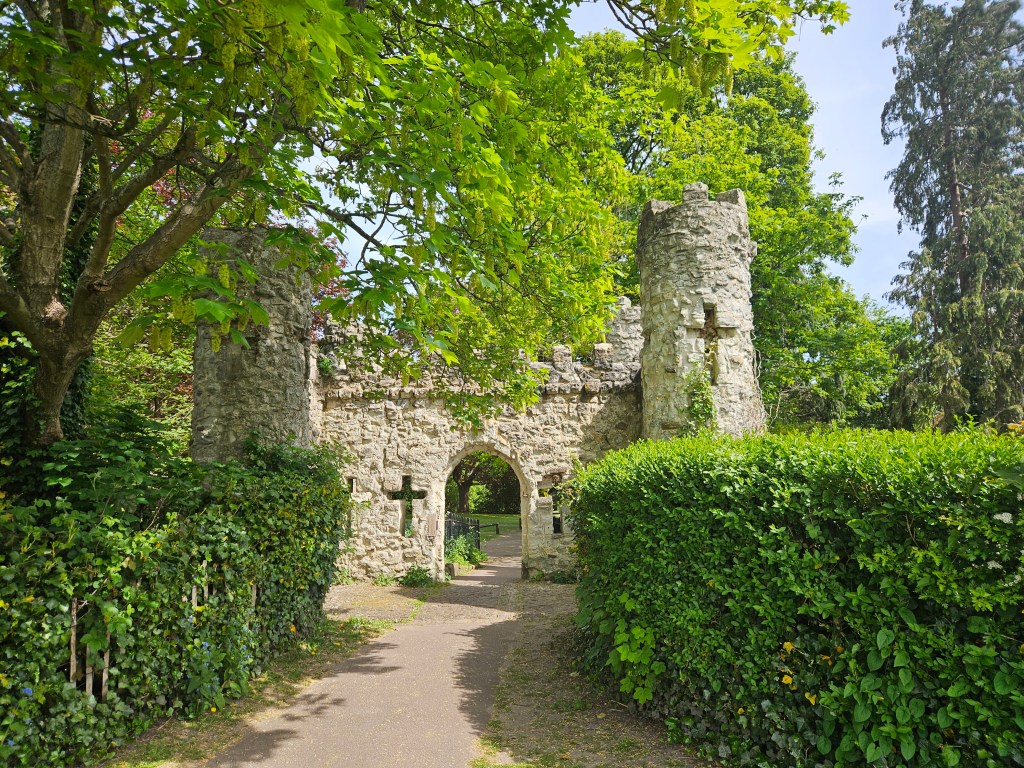
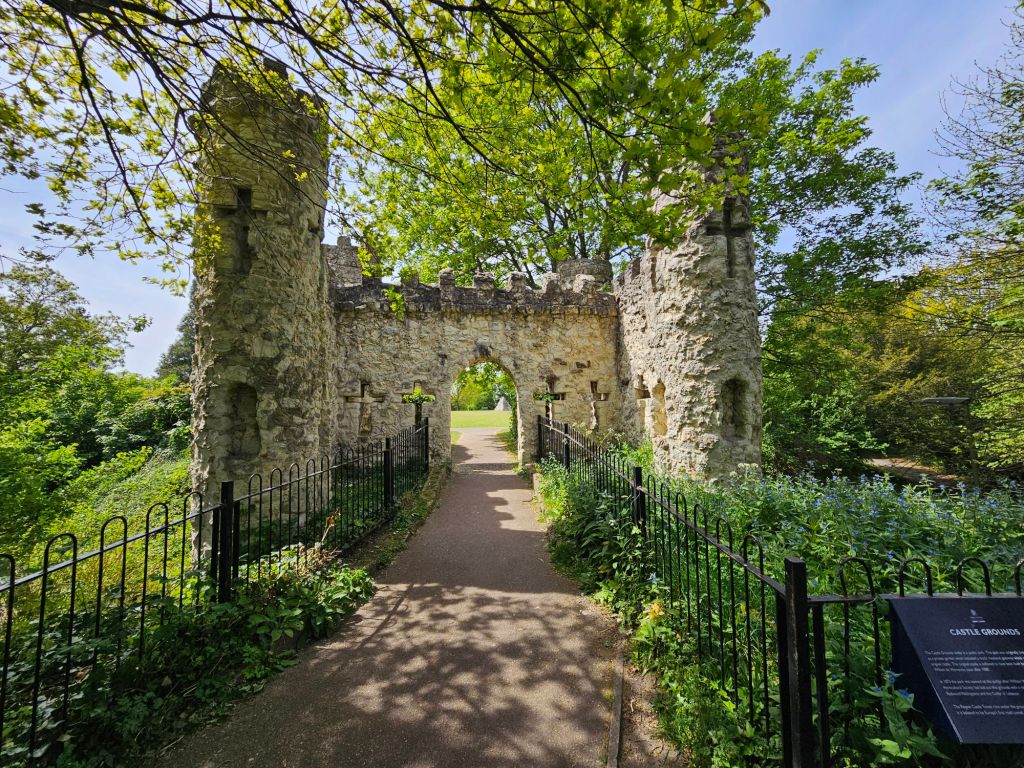
Reigate Castle Grounds are small, but they are exactly the sort of small historic place I love: tucked away, green, pretty, and with just enough old stone to make you stop and wonder what used to be there. It is not a huge site, and it does not need to be. The charm is in the details: the mock medieval gateway, the stone walls, the little window openings, the shaded paths, the old trees, and the feeling that this quiet public garden has had several lives before this one.
The stone gateway is the obvious highlight. It looks like a little castle ruin at first glance, but the history is more layered than that. The original Reigate Castle is believed to have been built soon after 1088 by William de Warenne, the Second Earl of Surrey. The castle itself is long gone, but in 1777, Richard Barnes created the grounds as a private garden and built the mock medieval gateway over the ruins of the original castle.
So the gateway is not the original castle, but it still sits on a genuinely historic site, which makes it more interesting than if it were just random decorative stone pretending to be important.
The grounds later became public in 1873, after William Wilson Saunders, Vice President of the Royal Horticultural Society, laid out the park with a variety of new tree species, including the Giant Redwood/Wellingtonia and Cedar of Lebanon. That explains why the place feels so leafy and established. The trees are not just background. They are part of the whole atmosphere.
One thing I liked was how the Castle Grounds mix neat little garden areas with slightly wilder corners. You can stand near the gateway and get the pretty, postcard version, then wander around and find darker water, old tree stumps, twisting branches and odd little natural details. Some parts feel peaceful and polished, while others feel more like the edge of a story.
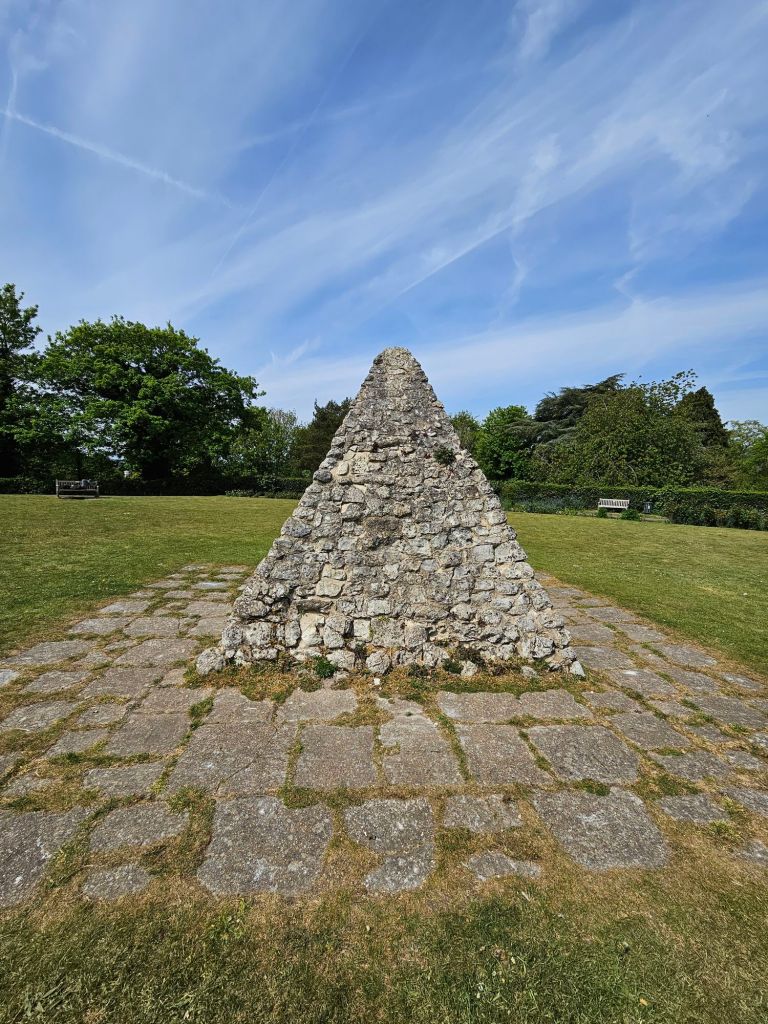
There is also a pyramid-shaped stone feature in the grounds, which adds another interesting detail to the site. It is not the sort of place where you need hours, but it is perfect for a slow wander, especially if you like old places, gardens and photo spots. The stone textures are beautiful up close, particularly around the old window openings, and the gateway looks gorgeous framed by greenery and blue sky.
Reigate Castle Grounds are not dramatic in the grand castle sense, but they are very pretty and very easy to enjoy. They are free, central, quick to explore, and full of little details that reward looking properly. For me, it was one of those places that proves you do not always need a big day out. Sometimes an old stone gateway, a few ancient trees, and a quiet path are enough.
Reigate Fort
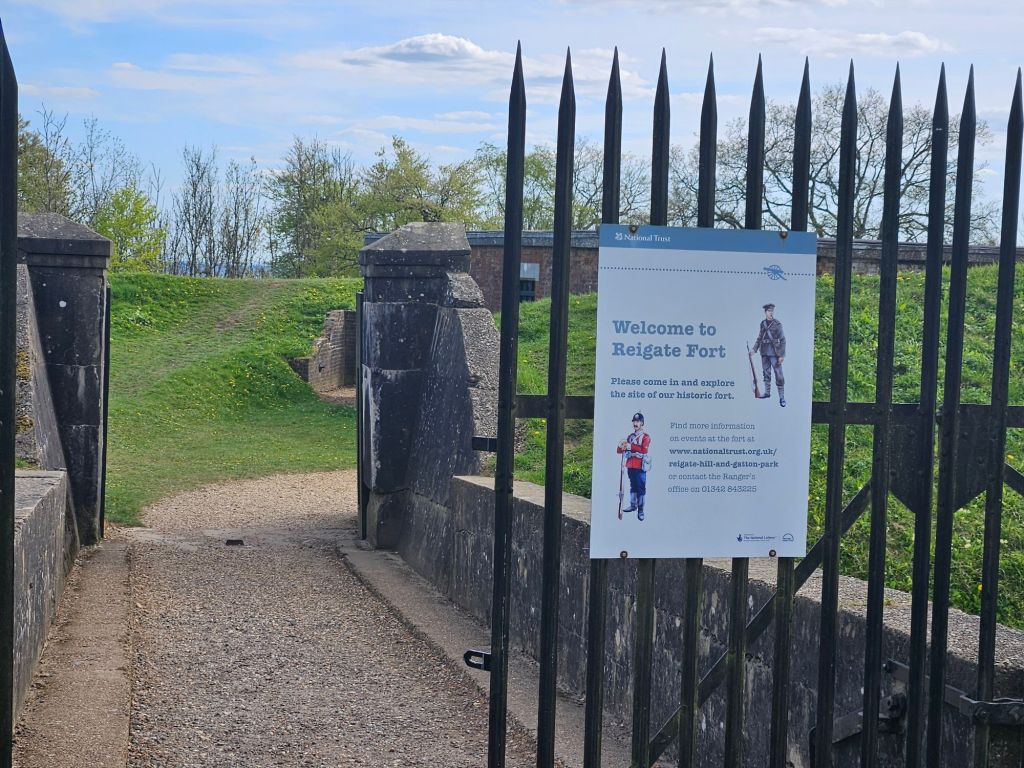
Reigate Fort was the place that surprised me most, because from a distance it does not look overly dramatic. It is not a towering castle ruin or a grand stately home. It sits low into the hill, half-hidden by grass, brick, iron gates and old military-looking walls, which somehow makes it more interesting. You have to walk into it a bit before it starts to reveal itself.
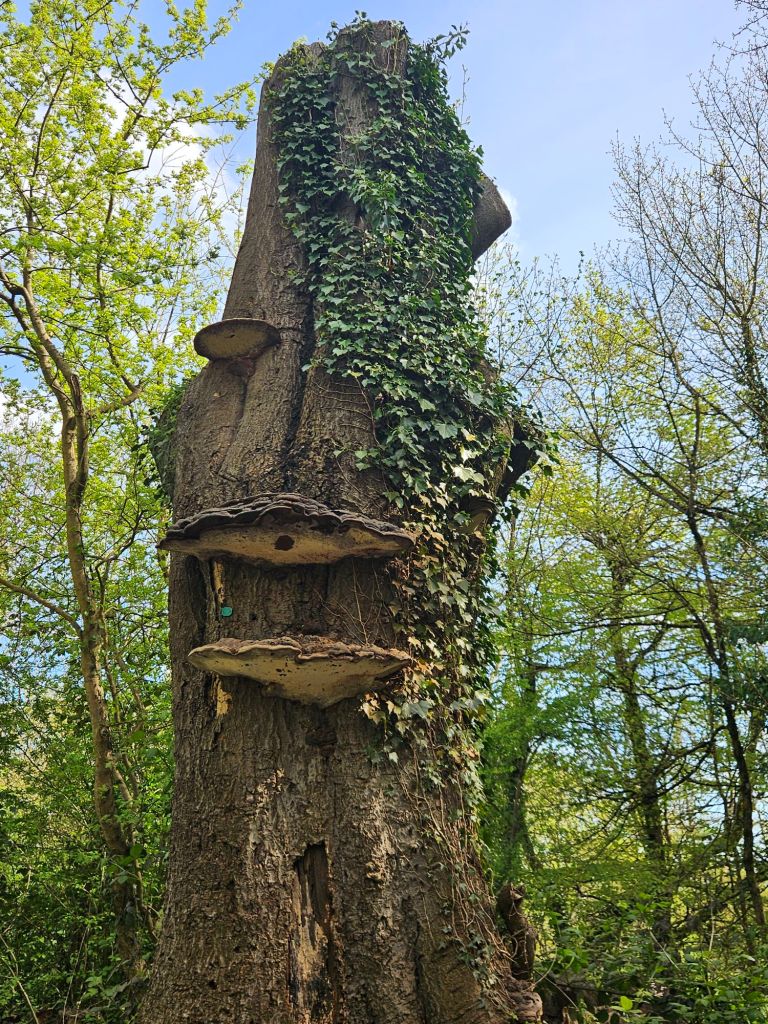
The approach already feels worth doing. Reigate Hill is beautiful, with proper wide views across Surrey, open sky, woodland paths and that slightly wild green edge that makes a walk feel like more than just a walk. There is also a National Trust sign, old trees covered in ivy, and fungi-covered tree stumps that look like they belong in a fairy tale.
The fort itself was built in 1898 as part of the London Defence Scheme, a defensive line designed to help protect London from the threat of invasion. It was not really a castle-style fort where people were living and fighting day after day. It was more of a mobilisation centre, storing tools, ammunition and supplies so troops could move quickly if London needed defending.
What I liked about it was that it still feels practical and solid. The brick buildings, barred windows, steep concrete steps and heavy gates give it a completely different feeling from the prettier parts of Reigate. It is not soft or decorative. It feels like a working military place, even though now it is quiet, open, and surrounded by grass and views.
It is also a good one if you like places that combine history with a walk. You can explore the fort, look through the old barred windows, wander around the earthworks, then step back out into open views over the countryside. There is a viewpoint marker showing distances to places like Dover and Canterbury, which makes you realise how high up you are. It gives the whole place a sense of position, as if the hill is still quietly watching everything below.
Reigate Fort is not huge, but it does not need to be. It is one of those places where the interest is in the details: the old gates, the brickwork, the underground-feeling steps, the views, and the way nature has grown back around something once built for defence. It is free, easy to include in a Reigate visit, and different enough from Priory Park and Reigate Castle Grounds to make it feel like its own proper stop.
Reigate Tunnel and the town centre
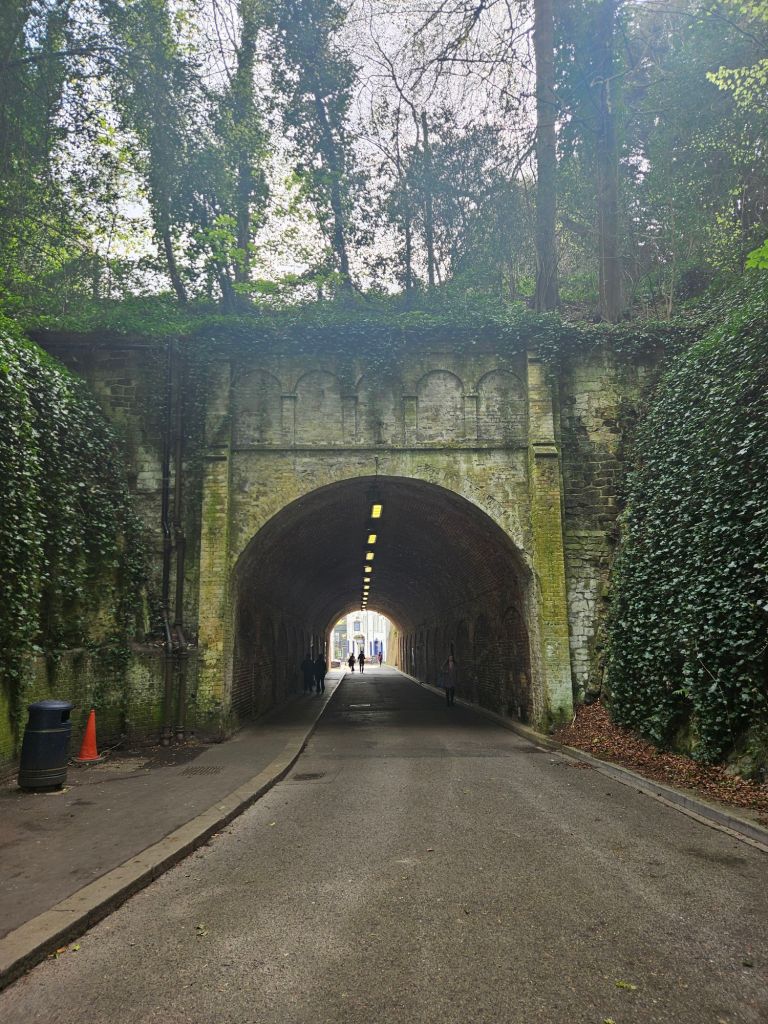
It is worth adding Reigate Tunnel into the day, because it connects so neatly with the Castle Grounds and the town itself. The tunnel runs underneath the Castle Grounds and was constructed in 1823. It is believed to be Europe’s first road tunnel, which is exactly the sort of random historical detail I love finding while wandering around a town.
The tunnel is still used as a road today, which makes it feel less like a preserved museum piece and more like history that has just been folded into ordinary life. You can stand there looking at the old brickwork, the arched entrance and the ivy-covered sides, while traffic and pedestrians keep moving through it as if this is not a rather impressive 200-year-old tunnel.
The Reigate Caves entrance is another little detail worth noticing, even if they are not always open. The doorway under the tunnel has that slightly mysterious “what is behind there?” look, which obviously appeals to me. Between the caves, the tunnel, the Castle Grounds and the old buildings, Reigate has more layers than it first lets on.
The town centre around it is also much prettier than I expected. Reigate has that lovely mix of old buildings, shopfronts, brickwork, tiled roofs, timber framing and little lanes that make a place feel properly lived in rather than polished for tourists. The old market-style building with the clock, the white-painted buildings, the tiled roofs, the pubs, the bakery, the little courtyard with shops and cafés all give the town a lot of character.
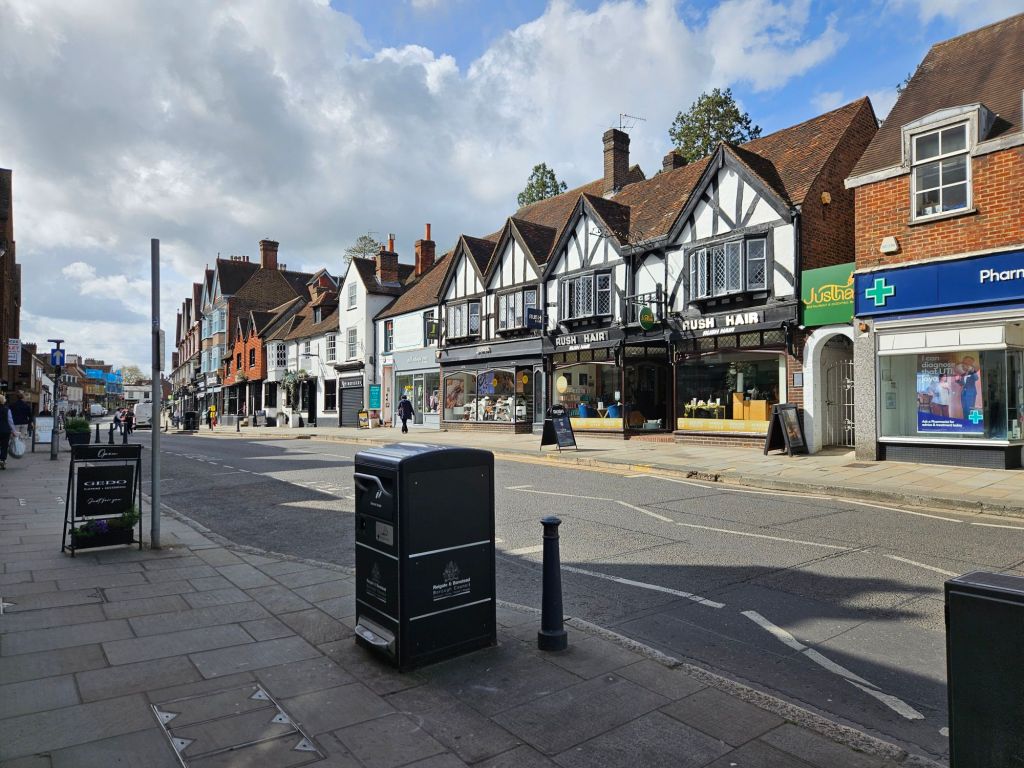
I especially liked that you can move from proper town streets into green spaces so quickly. One minute you are looking at cafés, shops and old buildings, and then you are near the tunnel, the caves, the Castle Grounds or heading towards Priory Park. It makes Reigate feel very easy to explore on foot, which is one of the best things about it.
Why Reigate makes such a good free day out
What made Reigate work so well for me was the variety. It was not just one park, or one historic spot, or one pretty street. It was all of those things together.
Priory Park gave me the lake, swans and peaceful paths. Reigate Castle Grounds gave me old stone, trees and a tucked-away historic garden. Reigate Fort gave me military history, views and something a bit more unusual. The tunnel and town centre tied it all together with caves, old buildings, cafés, pubs, shops and proper character.
It is the kind of place where you can have a full day out without needing to spend much at all. You can walk, take photos, sit by the lake, explore old ruins, look at historic buildings, wander through the town, and still feel like you have properly been somewhere.
For me, Reigate was one of those places that reminded me why I like exploring so much. Not every good day needs a ticket, a big attraction or a complicated plan. Sometimes a town quietly has far more to offer than you expected. Reigate definitely did.
 Roaming Towards Myself
Leave a comment