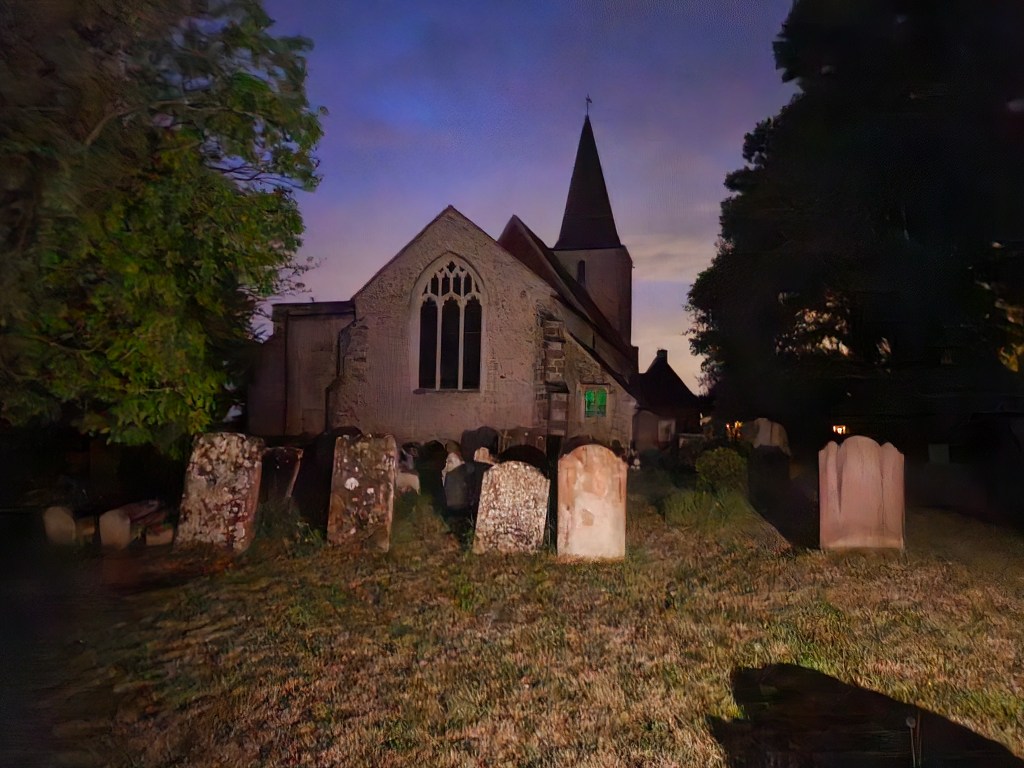
Pluckley may be famous for its ghosts, but one of the things I loved about the village was that it had more going on than just haunted stories.
Before the ghost walk even started, the village already had my attention. The old buildings, the brickwork, the arched windows, the pub, the churchyard and even Pluckley Tea all made it feel like a place with its own strong identity.
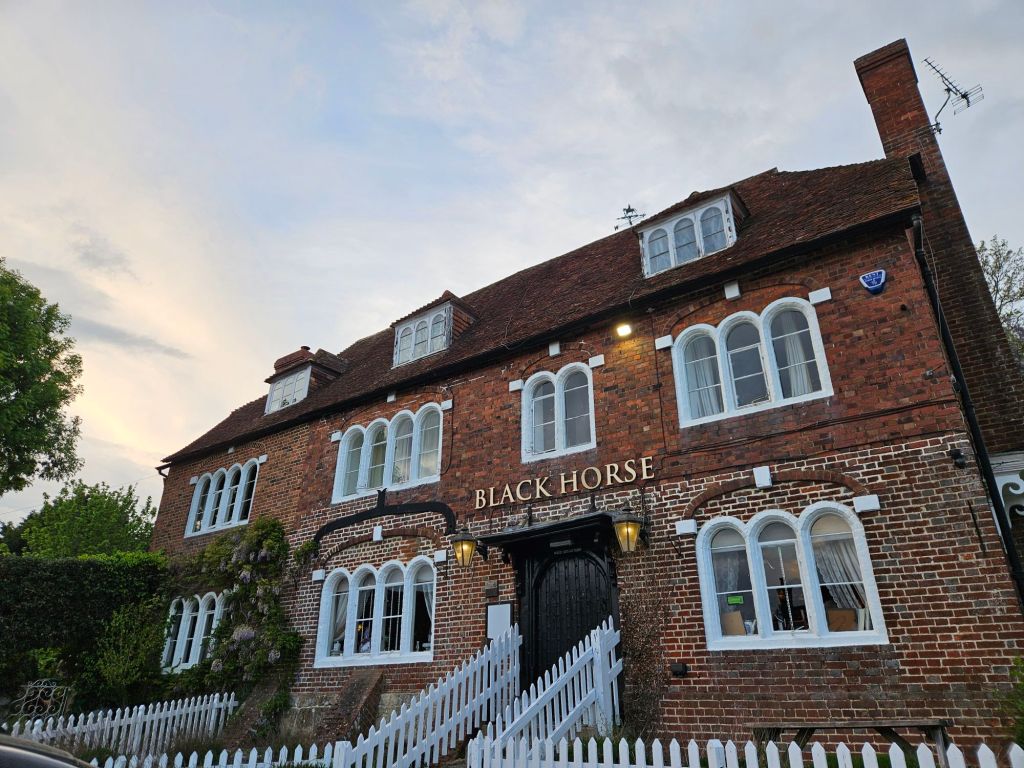
One of the details I noticed straight away was the arched windows. They are known as Dering windows, or “lucky windows”, and they appear on a number of buildings around the village, including the Black Horse pub. They have rounded tops and are often outlined in white, which gives the buildings a really distinctive look. Once I noticed them, I kept seeing them everywhere.
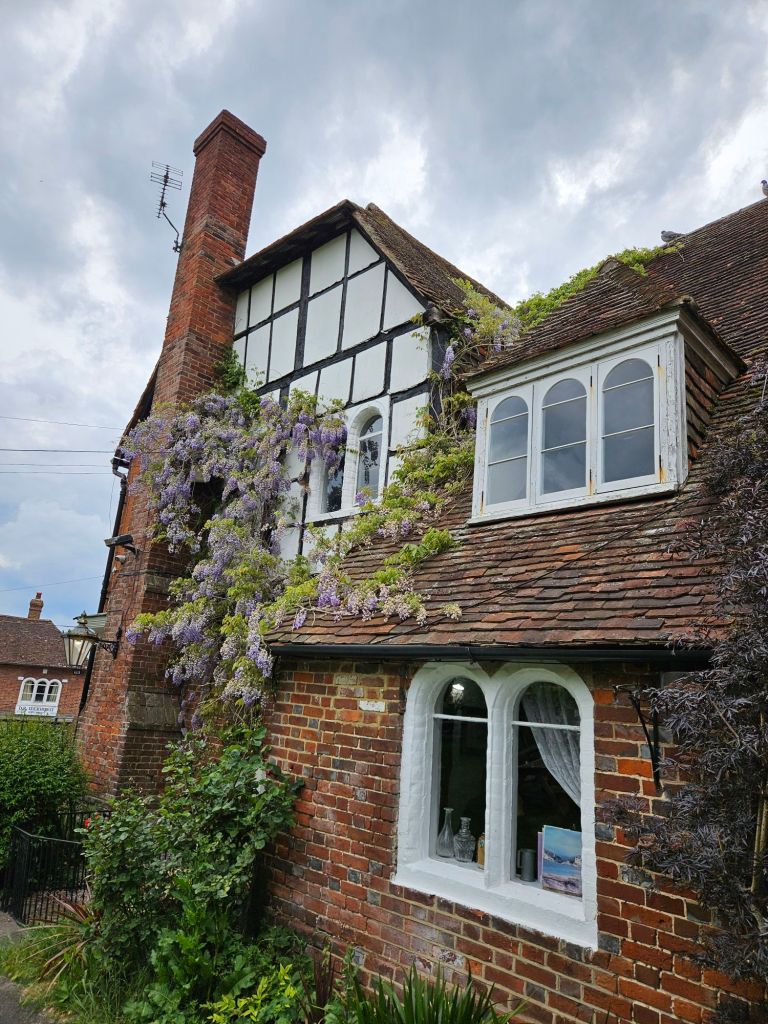
The story behind them is linked to the Dering family. Sir Edward Cholmeley Dering is said to have introduced the rounded window style across properties on his estate in the 19th century. The legend behind the design is that one of his Civil War ancestors escaped capture by getting out through a narrow, curved-topped window. Whether you take the story as family legend or local history, it gives those windows a lot more meaning once you start spotting them around the village.
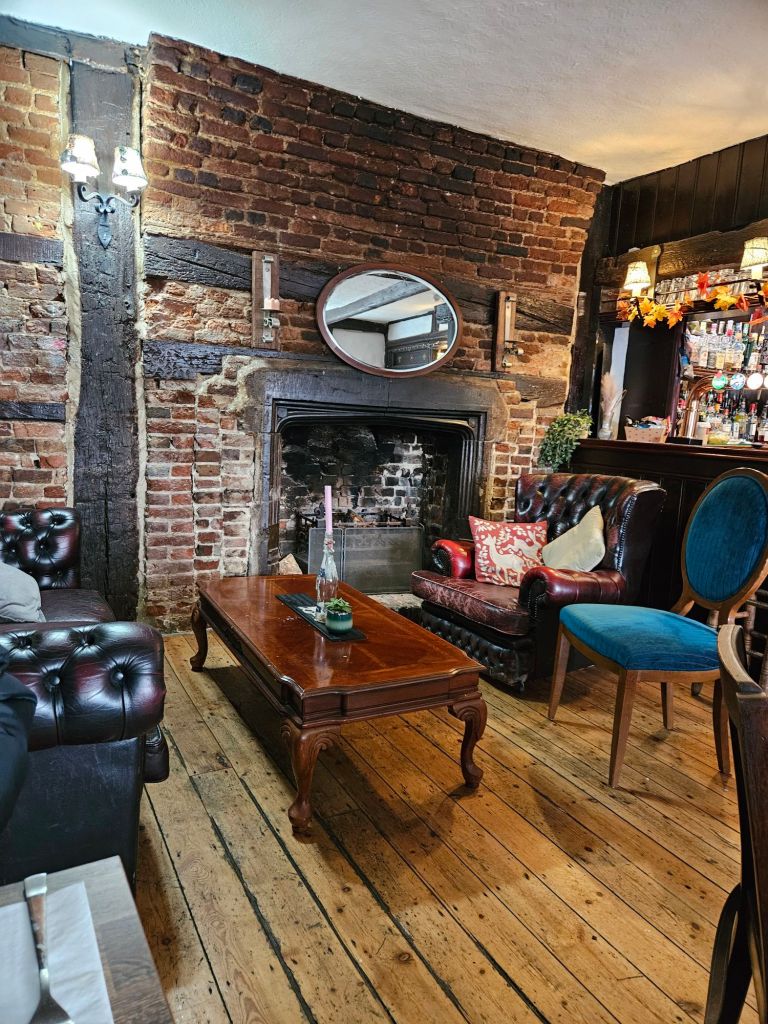
Then there are the bricks. Pluckley had its own historic brick and tile works, the Pluckley Brick & Tile Company, which operated from the late 19th century until around the 1970s or 1980s. It was known for red and blue vitrified bricks, and clay was sourced locally. That made the village’s brick buildings feel more interesting to me, especially the Black Horse, with its old brick, beams, fireplace and lived-in character.
I also found out about Pluckley Tea, which is produced by Kent Tea and Coffee Co. It’s a small detail, but I love things like that when I travel. A village having its own tea gives it another little layer, beyond the ghost stories and the famous reputation.
St Nicholas’ Church is another big part of the village’s character. The church is around 900 years old and Grade I listed. There has been a church on the site since at least the late 11th century, with the present building dating mainly from the 13th or 14th centuries, and later changes in the 15th century. It also has links to the Dering family, which ties back into the wider history of the village.
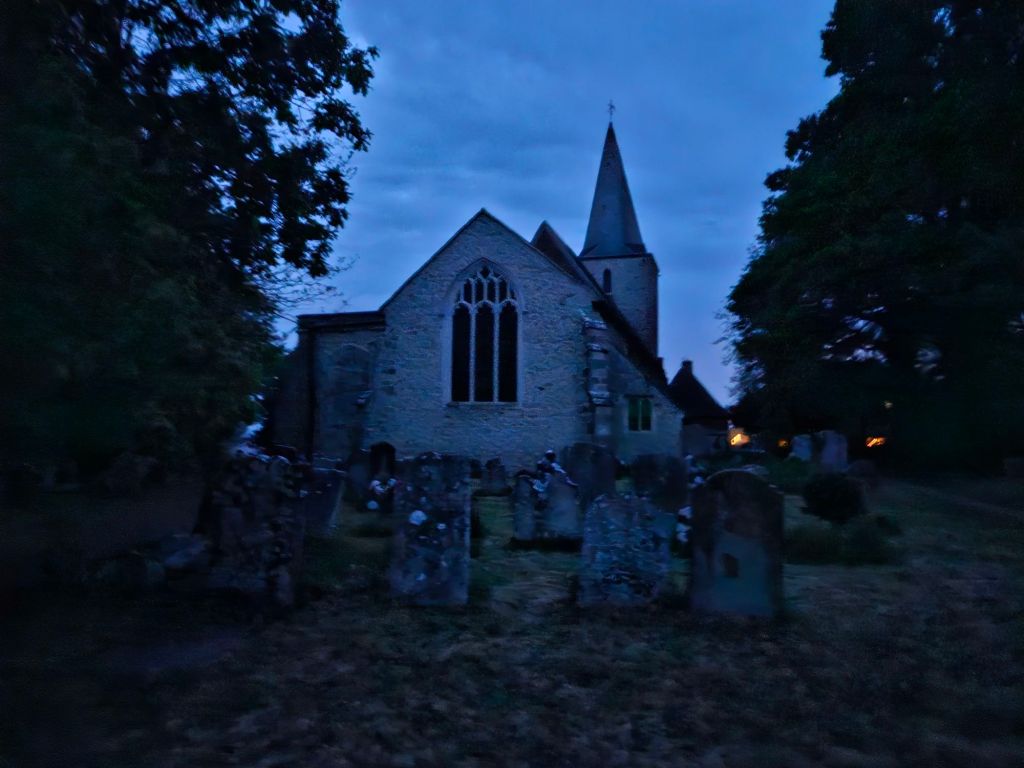
Pluckley is also known as one of the filming locations for The Darling Buds of May, which adds another layer of interest. So while most people know Pluckley because it was named Britain’s most haunted village by the Guinness Book of Records in 1989, the village itself is more than that title.
For me, the ghost stories were still the main draw. Unfortunately we did not come across any ghosts during our time on the tour. That’s why I went. But the history, the old buildings, the Dering windows, the brickwork, the church, the tea and the village details made the ghost walk feel richer. And to be fair I wouldn’t want to be roaming around the cemetery on my own. It definitely has an eerie atmosphere.
Pluckley isn’t just a place with ghost stories. It’s a village where the ghost stories sit inside a much older and more interesting local history.
 Roaming Towards Myself
Leave a comment